
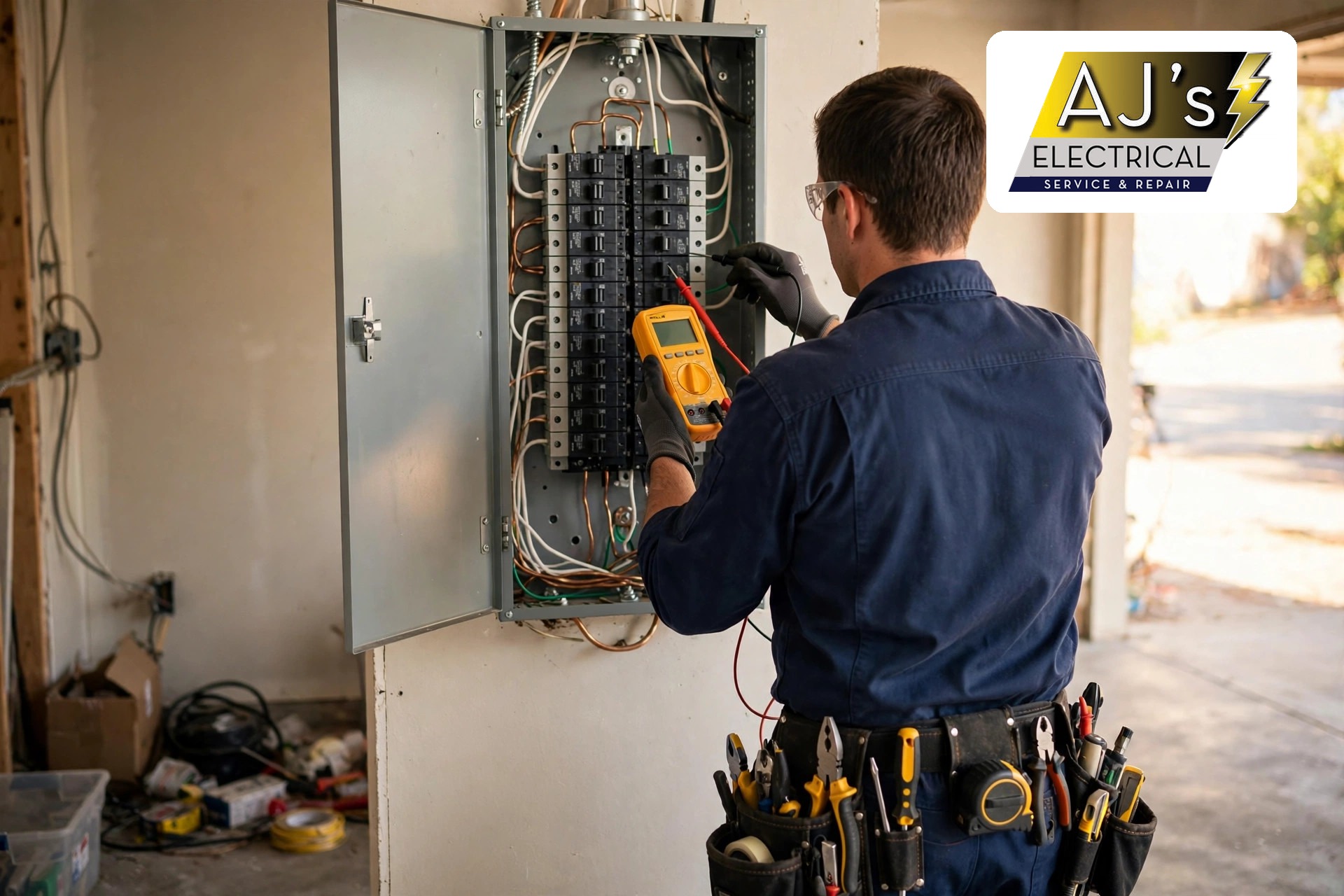
Why Does My Circuit Breaker Keep Tripping? A Metro Vancouver Electrician Explains
Reading time: 9 minutes
Key Takeaways
- The three most common causes of a tripping breaker are an overloaded circuit, a short circuit, and a ground fault.
- You can safely reset a breaker once after unplugging devices — but never force a breaker that won’t stay on.
- Space heaters, hair dryers, and multiple high-wattage devices on one circuit are the top culprits in Metro Vancouver homes.
- Burning smells, scorch marks, buzzing sounds, or a warm panel mean stop and call a licensed electrician right away.
- Older Vancouver homes with aging panels may need an upgrade to handle modern electrical demand.
- What It Means When Your Breaker Trips
- Why an Overloaded Circuit Is the #1 Cause
- What Is a Short Circuit (and Why It’s Serious)
- Ground Faults: The Silent Safety Risk
- When the Breaker Itself Is the Problem
- Safe Steps to Take Before Calling an Electrician
- When You Must Call a Licensed Electrician
- Why This Happens So Often in Metro Vancouver Homes
- Frequently Asked Questions
What It Means When Your Breaker Trips
Think of your circuit breaker as a watchful guard. Each circuit in your home — the kitchen outlets, the bedroom lights, the bathroom — is rated to carry a specific amount of electrical current, usually 15 or 20 amps in a typical North American home. When the current exceeds that safe limit, or when electricity takes a dangerous shortcut, the breaker snaps off within a fraction of a second.
This is one of the biggest differences between modern breaker panels and the old fuse boxes found in some older Vancouver homes. Fuses had to be replaced after blowing; breakers can simply be reset — but only once you’ve found and removed the cause.
Why an Overloaded Circuit Is the #1 Cause
Here’s a scenario we see constantly in Metro Vancouver: it’s a cold, rainy evening. A space heater is running in the home office, someone starts the hair dryer in the bathroom, and the microwave kicks on in the kitchen. If two or three of those land on the same 15-amp circuit, the breaker trips. Nothing is broken — the circuit just can’t deliver that much power at once.
Common high-draw culprits:
- Space heaters (often 1,500 watts — a full circuit by themselves)
- Hair dryers, toaster ovens, and microwaves
- Window air conditioners or portable AC units
- Power tools in the garage or workshop
- Older homes where one circuit serves an entire floor
If your breaker trips right when you switch something on, you’re almost certainly dealing with an overload. The fix is usually simple: move one of the devices to a different circuit. If that isn’t practical — for example, your home office setup keeps growing — a licensed electrician can add a dedicated circuit for your heaviest loads.
What Is a Short Circuit (and Why It’s Serious)
A short circuit is more serious than an overload. It can be caused by damaged wiring, a faulty appliance, or — very commonly after BC’s fall windstorms — damaged outdoor wiring or a compromised connection. Because a short circuit allows a massive amount of current to flow at once, it generates intense heat very quickly.
Signs you’re dealing with a short circuit rather than a simple overload:
- The breaker trips instantly, even with everything unplugged
- You notice a burning smell near an outlet or the panel
- Scorch marks or discoloration around outlets or switches
- A popping sound when the breaker trips
Ground Faults: The Silent Safety Risk
Ground faults are especially relevant in bathrooms, kitchens, laundry rooms, garages, and outdoor outlets — anywhere water and electricity can meet. That’s why Canadian building standards require GFCI (Ground Fault Circuit Interrupter) protection in these locations.
If a GFCI outlet or GFCI breaker keeps tripping, it’s usually one of these:
- Moisture inside an outdoor outlet or extension cord (very common in Metro Vancouver’s rainy season)
- A faulty appliance leaking small amounts of current — an aging kettle, space heater, or power tool
- A worn-out GFCI device that needs replacement
Here’s an important tip: GFCI outlets protect everything “downstream” from them. A tripping GFCI in your garage might actually be triggered by a faulty device plugged into an outlet in your backyard. If resetting the GFCI doesn’t hold, unplug everything on that circuit and plug items back in one at a time to find the culprit.
When the Breaker Itself Is the Problem
Like any mechanical device, circuit breakers degrade over time. In older Metro Vancouver homes — especially those with original panels from the 1970s, 80s, or 90s — it’s common to find breakers that have become overly sensitive and trip under normal loads.
Loose connections are another hidden cause. A wire that has worked slightly loose from a breaker terminal over years of thermal cycling can cause intermittent tripping, buzzing, or heat buildup at the panel. This is one of the reasons electricians recommend periodic panel inspections: a loose connection is invisible from the outside but can be spotted and tightened in minutes.
If multiple breakers are tripping, or your panel is more than 25–30 years old, it may be time to talk about a panel upgrade rather than replacing individual breakers one by one.
Safe Steps to Take Before Calling an Electrician
Before you pick up the phone, these safe steps will often identify (or even fix) the problem:
- Unplug devices on the affected circuit. Start with the high-draw items — heaters, hair dryers, kitchen appliances.
- Go to your panel and reset the breaker once. Flip it fully to OFF, then firmly to ON. (Breakers must be pushed fully off before they’ll reset.)
- Plug devices back in one at a time. When the breaker trips, the last device you plugged in is your prime suspect.
- Check GFCI outlets. Press the RESET button on any GFCI outlets on that circuit — in bathrooms, kitchens, garages, and outdoors.
- Note the pattern. Does it trip when a specific appliance runs? Only in wet weather? Immediately with nothing plugged in? This information is gold for your electrician.
When You Must Call a Licensed Electrician
Some tripping breakers are simple overloads. Others are your home’s way of telling you something is wrong behind the walls. Call a professional if you notice any of these:
- A burning or acrid smell near the panel, outlets, or switches
- Scorch marks, discoloration, or melted plastic around outlets
- A breaker that trips instantly with everything unplugged
- Buzzing, crackling, or sizzling sounds from the panel
- The panel or a breaker feels warm to the touch
- Flickering lights throughout the house (not just one room)
- Your home still has a fuse box or a very old breaker panel
In British Columbia, electrical work must be done by a licensed electrician — and for good reason. Panel work involves live components even with the main breaker off, and mistakes can be fatal. A licensed electrician will diagnose the cause properly, whether it’s a failing breaker, a wiring fault, or a panel that’s simply outgrown your household’s needs.
Why This Happens So Often in Metro Vancouver Homes
Metro Vancouver’s housing creates a perfect storm for tripping breakers:
- Older homes: Many homes in Vancouver, Burnaby, and New Westminster were wired decades before today’s electronics existed. A circuit designed for a few lamps now feeds computers, monitors, chargers, and entertainment systems.
- Wet weather: Our famous rain finds its way into outdoor outlets, crawl spaces, and aging exterior wiring, triggering GFCI trips and ground faults — especially from October through March.
- Storm damage: Fall and winter windstorms can damage service lines and outdoor connections. If your breakers started tripping after a storm, have your system checked — and consider whole-home surge protection to guard against the next one.
- Basement suites and laneway homes: Added living spaces often share the original panel, stretching circuits beyond what they were designed for.
- Home offices and EV chargers: Remote work setups and Level 2 EV chargers add serious continuous loads that older panels weren’t planned for.
Frequently Asked Questions
Is it safe to reset a tripped breaker?
Yes — resetting a tripped breaker once is safe, provided you first unplug devices on that circuit and there are no signs of burning, scorch marks, or unusual smells. Flip the breaker fully to OFF, then back to ON. If it trips again right away, leave it off and call a licensed electrician.
Why does my breaker keep tripping with nothing plugged in?
A breaker that trips with nothing plugged in usually points to a wiring problem — a short circuit, a ground fault in the wiring itself, a loose connection, or a failing breaker. This is not a DIY diagnosis; it requires a licensed electrician to test the circuit safely.
Can a space heater cause my breaker to trip?
Absolutely — space heaters are the most common cause of tripped breakers in winter. A typical 1,500-watt space heater draws about 12.5 amps, nearly maxing out a standard 15-amp circuit all by itself. Run it on a dedicated circuit, or at least make sure nothing else heavy shares that circuit.
How many times can a breaker trip before it goes bad?
Breakers are designed to trip many times over their lifespan, but frequent tripping does wear them out. If a breaker trips often, it can become overly sensitive and start tripping under normal loads. Breakers in homes that are 25–30+ years old are common candidates for replacement.
What’s the difference between a tripped breaker and a blown fuse?
They do the same job — cutting power to protect the circuit — but a breaker can be reset while a blown fuse must be replaced. Most Metro Vancouver homes now use breaker panels; if yours still has fuses, it’s a strong sign your electrical system is due for an upgrade.
Should I replace a 15-amp breaker with a 20-amp breaker to stop tripping?
No — never. The breaker size must match the wiring behind it. Installing a larger breaker on wiring rated for less current removes your protection against overheating and creates a serious fire hazard. If you need more capacity, an electrician needs to run a new circuit with properly rated wiring.
Do I need an electrician, or can I fix a tripping breaker myself?
You can safely unplug devices, reset the breaker, and identify an overloaded circuit yourself. Anything beyond that — opening the panel, replacing breakers, tracing wiring faults — should be done by a licensed electrician. In BC, panel and wiring work legally requires a licensed professional.
Tired of Breakers That Won’t Stay On?
With over 60 years of combined experience, AJ’s Electrical diagnoses tripping breakers fast — and fixes the real cause, not just the symptom. Serving Metro Vancouver and the Lower Mainland.
Call today for fast, friendly, licensed electrical service.
